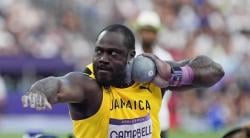
Why Elite Athletes Always Pause Before the Big Moment
Watch a basketball player step up to the free-throw line and you'll almost always see a pause before the shot goes up. A golfer will step back, take a breath, and settle in before starting the swing. A tennis player bounces the ball again and again before serving. A sprinter can look almost completely still in the blocks, even with all that pressure building around them.
These rituals don't look alike on the surface, but they're doing the same basic thing: carving out a moment of control right when the body is under the most pressure.
That matters because how an athlete performs isn't just down to muscle. The nervous system is constantly moving between activation and recovery, and that shift affects heart rate, breathing, attention, emotional control, and how the body handles physical stress. One piece of that system getting a lot more attention lately is the vagus nerve.
What the Vagus Nerve Does
What is the vagus nerve? The vagus nerve is the 10th cranial nerve. It’s a primary communication pathway between the brain and the organs such as the heart, lungs, and digestive system. It has a major role on the parasympathetic side of the autonomic nervous system — the side usually associated with rest, recovery and settling back down after stress.
That doesn't mean it's just some kind of "off switch," though. Performance actually depends on a balance between activation and recovery. Before competing, an athlete needs enough arousal to react fast and stay locked in. But too much of it can start messing with fine motor control, decision-making, and focus.
That's part of why pre-performance routines are useful in the first place. A deliberate breath, a repeated movement, a few seconds of standing still — these can give an athlete a predictable bridge between everyday activity and the task right in front of them.
Researchers looking into the vagus nerve and sports performance are trying to figure out whether this relationship can be influenced more deliberately.
Why Recovery Matters as Much as Performance
Training puts the body under stress. Muscles get loaded up, energy stores run down, body temperature shifts, and the cardiovascular and nervous systems have to respond to all of it. Recovery is just the process of those systems working their way back to normal.
Heart-rate variability, or HRV, is one of the measures researchers rely on when they're studying autonomic regulation. Some HRV measures reflect vagal activity specifically, and they can offer a window into how the parasympathetic system is responding.
One systematic review and meta-analysis looking at post-exercise recovery techniques found that physical recovery strategies can lead to positive changes in vagally mediated HRV — though the results shift depending on the intervention and the circumstances.
That naturally raises a question for athletes: could techniques that influence vagal activity end up being another tool for managing that transition out of intense effort and back into recovery?
Vagus Nerve Stimulation and Athletic Recovery
There's more than one way to deliver vagus nerve stimulation. The traditional medical approach uses implanted devices, while transcutaneous methods try to stimulate branches of the nerve through the skin, no surgery involved. Devices like Truvaga Plus fall into this transcutaneous category, designed for at-home use rather than a clinical setting.
Lately, research has zeroed in on transcutaneous vagus nerve stimulation specifically in relation to exercise.
In 2026, a systematic review included 15 randomised controlled trials (RCTs) with 566 participants. It found that stimulation was associated with changes in some measures of autonomic recovery including vagal reactivation and cardiovagal baroreflex sensitivity. However, results were not consistent across all studies, with results depending on stimulation parameters, timing and the participants.
More importantly, none of this evidence currently shows that vagus nerve stimulation reliably makes athletes stronger or faster. That same review found effects on maximal physical performance were limited and inconsistent, and overall confidence in the evidence ranged from very low to low.
That's a distinction worth holding onto. Influencing recovery-related physiology isn't the same as directly improving performance.
The Possible Benefits for Athletes
So the interest in vagus nerve stimulation goes beyond just chasing a faster race time.
Researchers are looking into whether influencing autonomic regulation could support things like recovery, stress regulation, fatigue, and overall readiness. One recent review on the vagus nerve in recreational and elite sports pointed to its connections with cardiovascular regulation, emotional response, inflammation, cognitive control, stress resilience, and physical recovery. It also flagged things like controlled breathing, HRV biofeedback, and transcutaneous stimulation as areas where research interest is growing, with consumer devices such as Truvaga Plus increasingly part of that conversation.
For athletes, it's easy to see the appeal. Being able to move efficiently between high activation and recovery could matter a lot during tournaments, multi-day events, double training sessions, or stretches of heavy workload.
Still, these are possibilities worth investigating, not guarantees that have already been proven out.
Where Pre-Performance Rituals Fit In
The pause before a free throw, or the golfer's exhale, isn't necessarily proof that an athlete is consciously "stimulating the vagus nerve." It's better understood as one part of a bigger strategy for managing attention and arousal.
Slow, deliberate breathing can shift autonomic activity, and familiar routines cut down on the number of decisions an athlete has to make right before performing. The ritual ends up working almost like a psychological signal — training's done, preparation's complete, now it's time to execute.
This is where the vagus nerve becomes an interesting part of the bigger picture. Rather than treating performance as some simple fight between nerves and confidence, sports science is increasingly looking at how the brain, cardiovascular system, breathing, attention, and recovery all interact with each other.
What the Research Still Needs to Answer
There are still real gaps in the evidence. Studies have varied in stimulation location, intensity, frequency, duration, and timing. Participants have ranged from recreationally active adults all the way to elite athletes, which makes it hard to compare results directly.
What's needed now are bigger, longer trials with standardized stimulation protocols and outcomes that actually matter for athletes. It also still needs to be figured out whether changes in something like HRV actually translate into improvements athletes can notice during training or competition.
For now, the most reasonable takeaway is a cautious one. Vagus nerve stimulation benefits for athletes are still an emerging area of research, especially around autonomic regulation and recovery — not a proven shortcut to elite performance.
That pause before the big moment stays fascinating for another reason too: elite athletes have long known, through experience alone, that controlling the transition into performance matters. Modern neuroscience is just now starting to figure out what's actually happening inside the body during those few quiet seconds.