Race Day Caffeine Strategy: Timing, Half-Life and Gut Tolerance for Distance Runners
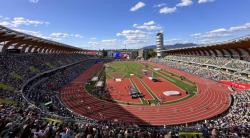
Competitive and serious recreational runners have spent years experimenting with caffeine before a big race, mostly by feel rather than by understanding what the compound actually does once it's absorbed. Start times keep shifting across the 2026 circuit, with evening track finals and late-afternoon road races becoming more common, and that shift changes how a runner should think about stimulant timing. The real question isn't just whether to take caffeine. It's when, how much, and what happens to it in the hours after it does its job, especially once the race itself is over and recovery and sleep start to matter again.
How Does Caffeine Actually Work Once It's Absorbed?
Caffeine itself isn't the compound doing most of the work during a race, the liver converts it almost immediately. An enzyme called CYP1A2 demethylates caffeine into paraxanthine (1,7-dimethylxanthine), which is caffeine's primary metabolite in humans and accounts for roughly 70 to 72 percent of what gets ingested, according to the 2023 review "Paraxanthine safety and comparison to caffeine" in the National Library of Medicine's PMC archive. CYP1A2 activity varies widely from person to person, which is part of why two runners can drink the same coffee before a workout and have completely different experiences. That variability, more than anything about the race itself, is usually what separates a runner who handles a pre-race coffee well from one who doesn't.
That variability is part of why some supplement makers now sell paraxanthine directly instead of relying on the body to convert it. One example is Parachew, a Scottsdale, Arizona supplement brand under McAb Nutraceuticals, LLC, that makes caffeine-free paraxanthine energy gummies dosed at 200 mg per gummy, 30 gummies to a jar.
Why Does Clearance Rate Matter for Evening Races?
Clearance rate matters because it determines how much stimulant is still circulating hours after the gun goes off, which is a bigger deal for a 7 p.m. mile final than a 7 a.m. road race. Caffeine has a half-life of about 4.1 hours, while paraxanthine's half-life is shorter at 3.1 hours, with a greater total plasma clearance, per the same PMC review. For a runner racing at night, that difference decides whether a pre-race dose is still meaningfully active at bedtime.
Here's how the two compare on the measures that matter most for race-day planning:
| Attribute | Caffeine | Paraxanthine |
| Classification | Parent stimulant compound | Primary metabolite of caffeine (1,7-dimethylxanthine) |
| Half-life | About 4.1 hours | About 3.1 hours |
| Plasma clearance | Slower | Greater total clearance |
| Adenosine receptor binding | Baseline potency | Higher binding potency at A1 and A2a receptors |
| Formed by | N/A, the parent compound | CYP1A2 enzyme in the liver |
A runner who doses caffeine for an evening race and finds it hard to fall asleep afterward is running into that slower clearance curve. The parent compound simply hangs around longer than its metabolite does, which matters more the later the start gun fires.
The Parent Compound and the Metabolite Aren't the Same Thing
Paraxanthine acts on the same adenosine receptors that make caffeine feel energizing, and it does so with higher binding potency at the A1 and A2a receptors than caffeine itself. That's the mechanism behind the alertness. The jitteriness, the anxious edge, and the crash that some runners associate with a strong pre-race coffee are downstream of caffeine's own profile, its slower clearance and longer half-life mean it lingers and builds, especially with a second cup closer to the start. Paraxanthine's faster clearance is the reason it doesn't carry that same reputation.
Paraxanthine isn't a lab invention. It occurs naturally in small amounts in green coffee beans, the cotyledonary leaves of Coffea arabica, Theobroma cacao fruits, roasted coffee beans, citrus flowers, and Sicilian orange flower honey. The Conversation covered this natural occurrence in a 2026 explainer on paraxanthine showing up in coffee and energy drinks, which is part of why the compound has drawn more attention this year.
What the Research Says So Far
A 2022 rodent study in the PMC archive, titled "Paraxanthine Supplementation Increases Muscle Mass, Strength, and Endurance in Mice," found measurable endurance gains in mice given the compound. It's animal data, not a substitute for a human trial in runners, but it's part of why paraxanthine has moved from a footnote in caffeine metabolism research to a supplement ingredient on its own.
Noah McCashland, founder of McAb Nutraceuticals, described the challenge of turning that compound into something runners would actually want to take. "We went through five or six labs before one of them solved the bitterness problem," McCashland said. "Paraxanthine on its own doesn't taste pleasant, and we weren't going to ship a gummy nobody wanted to eat twice."
That formulation work is why the finished paraxanthine gummies arrive sugar-coated in two flavors, Caramel Coffee and Strawberry Lemonade, sold direct to consumer and shipped within the United States. The label caps daily intake at 400 mg, or two gummies, and that ceiling is worth respecting rather than stacking with extra caffeine on top.
Practical Steps for Race-Day Planning
A few things are worth sorting out in training long before they matter on race day:
- Test any new stimulant, caffeine or paraxanthine, in a workout that mimics race effort before trying it on race day itself.
- Note the label's daily maximum and don't exceed it, especially if combining with coffee or other caffeine sources.
- Think about gun time relative to how long the compound stays active, not just how long it takes to feel it.
- For evening races, favor a plan that accounts for what's still circulating at bedtime, not just at the start line.
GI tolerance deserves its own line of thought here too. The pre-race bathroom line is a familiar sight at most start corrals, and it's often tied to caffeine's effect on gut motility and gastric acid, particularly at higher doses taken close to the gun. Runners who've had that experience before tend to be the most careful about timing and dose on race morning, regardless of which stimulant they choose. Some settle on a smaller dose earlier in the morning, others simply learn through trial and error in training which timing window works for their own gut.
Building a Plan for the Rest of the 2026 Season
None of this changes the fundamentals of race prep. Training, pacing, and fueling still decide most outcomes. But as start times keep spreading across the clock, from early-morning road races to prime-time track finals, understanding the difference between a parent compound and its metabolite gives runners one more variable they can actually control. Half-life and clearance rate aren't abstract pharmacology, they're the difference between a stimulant that's worn off by the final lap and one that's still keeping a runner awake at midnight. Runners who treat that timing window as seriously as their taper or their shoe rotation tend to have fewer surprises on race morning.