Breaking Down Your First Race Day
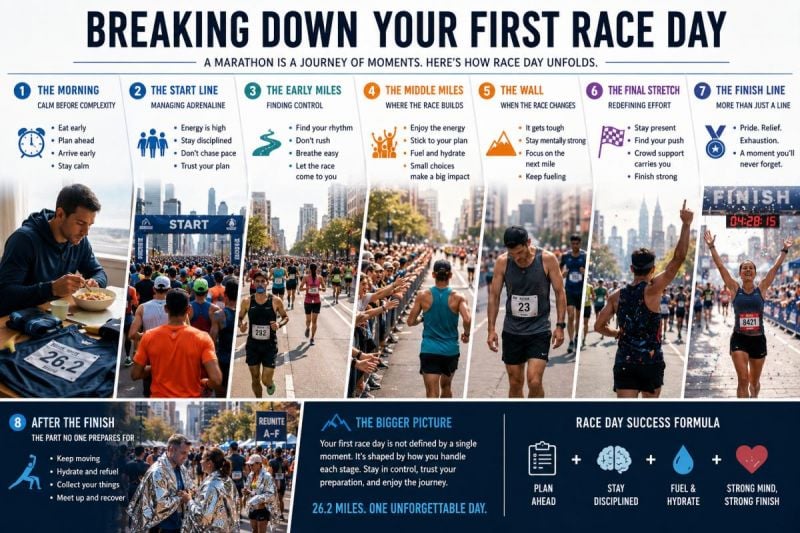
Your first marathon race day is not just about running 26.2 miles. It is a sequence of decisions, emotions, and moments that unfold from the second you wake up to long after you cross the finish line. Understanding how the day actually plays out can turn nerves into control and uncertainty into confidence.
The Morning: Calm Before Complexity
Race day starts earlier than expected. Major events often open gear check and start areas hours before the first wave begins, with some races starting in staggered waves from early morning onwards.
This means your morning routine matters. Eating early, allowing time to travel, and arriving with enough buffer to navigate crowds all help remove unnecessary stress.
What many first-time runners underestimate is how busy everything feels. Thousands of runners, security checks, bag drops, and last-minute logistics can quickly become overwhelming. The goal here is simple: stay calm, follow your plan, and avoid rushing.
The Start Line: Managing Adrenaline
Standing at the start line is one of the most intense moments of the day. Energy is high, the crowd is loud, and your body feels ready to go faster than it should.
This is where discipline begins.
The biggest mistake first-time marathon runners make is letting adrenaline dictate pace. The race has not even started yet, but decisions here will shape the final miles. Holding back in the opening kilometres is not a sign of caution. It is a strategy.
The Early Miles: Finding Control
The first few miles are about settling in.
In large races, runners often spend the opening stretch navigating crowds and adjusting pace. Courses like the Chicago Marathon wind through city streets and neighbourhoods, meaning the early stages can feel busy and slightly unpredictable.
This is not the time to chase pace targets aggressively. It is about finding rhythm, breathing comfortably, and letting the race come to you.
The Middle Miles: Where the Race Builds
Between miles 6 and 18, the marathon begins to take shape.
This is often the most enjoyable part of the race. Your body is warm, your pace feels sustainable, and the crowds can carry you forward. In major events, thousands of spectators line the course, creating a constant wave of energy that can lift your performance.
But this is also where subtle mistakes happen. Skipping a drink, delaying fuel, or pushing slightly too hard can seem insignificant at the time. Over distance, those small decisions build.
The Wall: When the Race Changes
For many first-time runners, the most talked-about moment arrives somewhere between miles 18 and 22.
Energy levels dip. Muscles tighten. The effort required to maintain pace increases sharply.
This is not just physical. It is mental.
The key here is expectation. Knowing this moment will come makes it easier to manage. Breaking the race into smaller sections, focusing on the next mile rather than the finish, and sticking to your fuelling plan can help you move through it rather than be stopped by it.
The Final Stretch: Redefining Effort
Once you reach the final few miles, the finish line becomes real.
This is where the race shifts again. Whether you are holding on or finding a final push, your mindset becomes the deciding factor. The body is already under strain, so the goal is to maintain forward momentum rather than chase perfection.
Crowd support often intensifies near the finish, especially in large city races, helping carry runners through the toughest moments.
The Finish Line: More Than Just a Line
Crossing the finish line is not just about stopping.
It is the release of everything that came before it. Months of training, early mornings, long runs, and race-day nerves all arrive at once. Many runners describe this as a mix of relief, pride, and exhaustion.
In events like the Chicago Marathon, the scale of the finish experience, from cheering crowds to post-race celebrations, amplifies that moment even further.
After the Finish: The Part No One Prepares For
What happens after the race is often overlooked.
Stopping suddenly can feel disorienting. Legs stiffen quickly, and even simple movements become difficult. Having a plan to collect your belongings, meet friends, and recover properly makes a big difference.
Major races often include structured post-race areas, including reunite zones and recovery spaces, because managing thousands of finishers requires organisation.
Taking your time here is important. The race may be over, but your body is still catching up.
The Bigger Picture
Your first race day is not defined by a single moment.
It is shaped by how you handle each stage, from the quiet morning to the crowded start, from the steady middle miles to the final push. Understanding this flow allows you to stay in control, even when things feel unpredictable.
Because in a marathon, success is not just about finishing. It is about how you move through every part of the day that gets you there.