Cold Plunge Recovery for Runners: Beyond Ice Baths
The Shift in Modern Running Recovery
In modern track and field and endurance running, performance is no longer determined only by training volume, but by how well athletes recover between sessions.
Recovery has become a key part of training itself. For marathon runners, middle-distance athletes, and high-volume endurance programs, being able to repeat quality sessions week after week often matters more than any single workout.
Traditionally, ice baths were used as the main recovery method. They were simple, accessible, and widely adopted across running communities. But over time, their limitations have become more obvious, especially when consistency and repeatability matter.
Why Cold Plunge Is Replacing Ice Baths
Ice baths still work in principle, but in practice they are difficult to standardize. The temperature changes depending on how much ice is used, how long the athlete stays in, and even ambient conditions.
Because of this, more runners are starting to shift toward more controlled cold exposure systems.
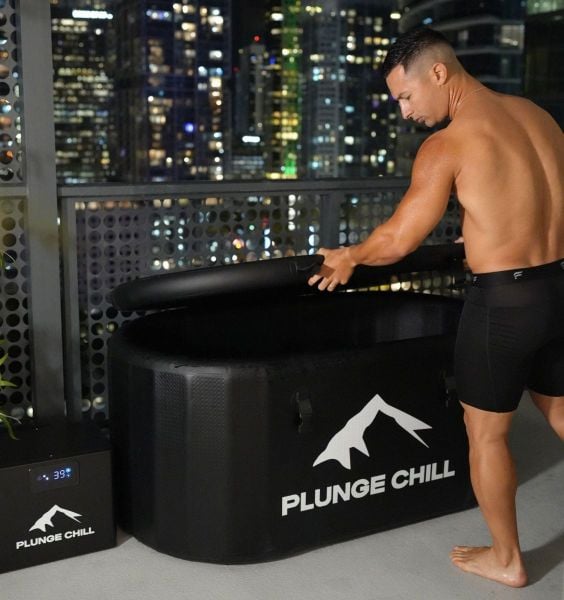
Some newer setups, such as Plunge Chill, are designed to make cold exposure more consistent without the variability of manually preparing ice baths every time.
At the same time, many athletes and coaches are also turning to a water chiller for ice bath system instead of relying on melting ice. The main advantage is simple: the temperature stays stable, which makes recovery sessions more repeatable across a training block.
Cold plunge systems generally offer:
- More stable temperature control
- Less variation between sessions
- Easier integration into daily training routines
For endurance athletes, that consistency is often more valuable than extreme cold exposure.
How Cold Plunge Supports Recovery
Cold water immersion affects the body in several ways that are relevant to runners.
One of the main responses is vasoconstriction. When exposed to cold, blood vessels narrow, and circulation is temporarily redirected. After rewarming, blood flow increases again, which may help the body process metabolic byproducts from training.
Another factor is hydrostatic pressure. When the body is submerged in water, gentle pressure is applied evenly across tissues. Many runners report that this helps reduce the feeling of heaviness or swelling after long runs or hard interval sessions.
There is also a nervous system component. Cold exposure tends to shift the body toward a more parasympathetic state afterward, which is associated with recovery and relaxation. In endurance sports, this is often indirectly tracked through HRV trends, especially during heavy training blocks.
Cold Plunge in Marathon and Track Training
For runners, especially those preparing for marathons or competing in track events, recovery quality often determines how well the next session goes.
Cold plunge recovery is commonly used to help:
- Reduce delayed onset muscle soreness (DOMS)
- Improve recovery between long runs
- Support consistency during high-mileage weeks
- Maintain readiness during interval-heavy training phases
It is not about replacing training adaptations, but about helping athletes stay consistent when training stress builds up over time.
This is especially relevant in marathon training, where fatigue accumulates gradually across weeks rather than appearing in a single session.
Cold Plunge vs Ice Baths
Ice baths and cold plunge systems are based on the same principle, but the experience is quite different.
Ice baths rely on manual preparation, which means the temperature is rarely identical from one session to the next. That variability makes it harder to track recovery responses consistently.
Cold plunge systems, on the other hand, offer a more controlled environment. This is why many athletes now prefer systems like Plunge Chill or setups using a water chiller for ice bath, especially when they want predictable recovery conditions.
In structured training programs, that repeatability becomes a practical advantage rather than just a comfort feature.
Conclusion
Cold plunge recovery represents a gradual shift in how runners approach recovery. Instead of relying on improvised ice baths, more athletes are moving toward controlled and repeatable systems that fit into structured training plans.
For runners and endurance athletes, this is less about chasing extreme cold exposure and more about building consistency across training cycles.
In that sense, cold plunge technology is not replacing training—it is helping athletes sustain it.
FAQ
Is cold plunge good for runners?
Yes, it may help reduce soreness and improve recovery between training sessions.
Is cold plunge useful for marathon training?
Yes, many marathon runners use cold plunge during high-volume training blocks.
Cold plunge or ice bath – which is better?
Cold plunge systems offer more consistent and repeatable recovery conditions.
Does cold plunge improve performance?
Indirectly, yes—by improving recovery and training consistency.