What Women Runners Actually Want From Their Race Day Gear
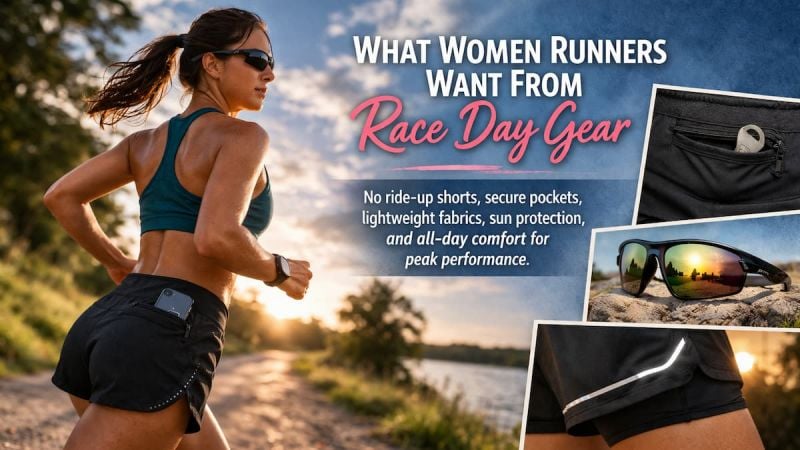
The running apparel industry has grown into a multi-billion dollar market, but for years, women's running gear was treated as an afterthought. Brands would take a men's design, shrink the pattern, add a pastel colorway, and call it done. That approach is finally changing, and the shift is being driven by the women who actually log the miles.
Whether you are training for a half marathon or grinding through weekly interval sessions, the gear you wear has a direct impact on comfort, performance, and whether you finish a run thinking about your splits or thinking about your waistband. Here is what experienced women runners say matters most.
The Rise-and-Stay Problem With Shorts
Ask any woman who runs regularly about her biggest gear frustration, and shorts will come up quickly. The most common complaint is simple: they ride up. A short that fits perfectly while standing starts migrating the moment your stride opens up. By mile three, you are pulling fabric out of places it should not be, and by mile six, you have mentally added "find better shorts" to your post-run to-do list.
The fix comes down to design details that many brands still overlook. A gusseted crotch allows a full range of motion without pulling the inseam upward. A slightly longer rise in the back accounts for the forward lean that happens naturally at pace. And a waistband that sits flat without relying solely on a drawstring makes a bigger difference than most runners expect.
Pockets That Actually Function
The pocket situation in women's running shorts has been a legitimate frustration for years. A shallow decorative pocket that cannot hold a car key without it bouncing out is not a pocket. It is a design failure. Women runners carry phones, keys, gels, and sometimes cash. They need at least one pocket deep and secure enough to hold essentials without affecting their gait.
The best designs incorporate a zippered back pocket or a side drop-in pocket with enough depth that items stay put during tempo runs and hill repeats. Internal waistband pockets work well for smaller items like a key or a gel packet. The point is that functional storage should be standard, not a premium feature.
Fabric and Weight for Race Day
Race day shorts should feel like they weigh almost nothing. Heavy cotton blends hold sweat, create chafing, and add unnecessary weight that compounds over longer distances. Lightweight woven fabrics with laser-cut ventilation panels keep airflow moving and dry faster when you pour water on yourself at an aid station.
Compression liners are a preference split. Some runners swear by them for reducing inner-thigh chafing. Others find them restrictive and prefer a brief liner or no liner at all. The best approach is finding shorts designed for women runners that offer options rather than forcing one liner style on everyone. Your preference at 5K pace is probably different from your preference at easy long-run pace, and having choices matters.
Do Not Overlook Eye Protection
One piece of gear that gets skipped far too often in race prep is eyewear. Squinting through the final miles of a marathon because the sun came out at mile 18 is a problem that is easily solved. Standard fashion sunglasses bounce and slide the moment you start sweating, but sport sunglasses built for running use lightweight frames with rubberized grips that hold in place no matter how much you sweat. Polarized lenses cut glare from wet roads and low-angle morning sun, which makes a real difference for early morning training and race day starts. If you run outdoors more than twice a week, dedicated running eyewear is one of those upgrades you wish you had made sooner.
Visibility and Safety Details
Early morning and evening runners make up a significant portion of the training population, especially during the work week. Reflective elements on running gear are not a vanity feature. They are a safety feature. Small reflective logos, piping along the hem, or reflective tape on the back of the waistband catch headlights and make a runner visible from a much greater distance.
The Bottom Line for Race Day
The best running gear disappears. You put it on, start your warm-up, and never think about it again. No adjusting, no chafing, no worrying about where your phone is, no squinting into the sun. That is the standard every runner should hold their gear to. The women's running market is finally getting the attention it deserves, with more options, better design, and gear that starts with the runner's experience rather than a recycled men's pattern.