The Olympic Dream Machine: Inside the Making of a Gold Medalist
Gold is a color. Gold is a promise. For many athletes, it is a life plan. The journey from first practice to an Olympic podium is a strange mix of science, ritual, money, luck, and stubbornness. Some become heroes. Most do not. Yet every Olympic champion was once a kid with shoes that didn’t fit quite right.
From dream to plan
Everyone dreams. People love reading stories online and putting themselves in the hero's shoes; that's natural. Reading alpha stories on FictionMe especially awakens dreams, but for most people, that's where things stop. Not many people can make it all the way from dreaming to Olympic gold.
How does a dream turn into a plan? Step one: a coach notices something. Step two: the athlete says “yes” enough times that habit forms. Step three: the small choices become a system. Training sessions are scheduled. Nutrition is not left to chance. Recovery becomes its own job.
There is no single path. Different sports demand different things. A sprinter peaks in seconds. A marathoner builds tolerance over years. A gymnast often starts very young. But certain patterns repeat. Consistency. Feedback. Measurement. Tiny improvements stacked day after day.
The physical engine
Training builds the body. Strength, speed, endurance, flexibility, coordination. Workouts vary. Sometimes short. Sometimes brutal. Sometimes boring.
Many elite athletes train between 20 and 40 hours per week. That range, converted to yearly totals, looks like this:
- 20 hours/week × 52 weeks = 1,040 hours/year.
- 30 hours/week × 52 weeks = 1,560 hours/year.
- 40 hours/week × 52 weeks = 2,080 hours/year.
That math shows why athletes speak of “investment.” Thousands of hours — spent sweating, learning movement, and fixing mistakes. Beyond hours, quality matters. One focused hour with a great coach can beat ten sloppy ones.
Equipment and facilities matter too. Ice rinks, tracks, pools, velodromes, specialized shoes. Not all athletes have equal access. That gap changes outcomes.
The mental edge
Physical preparation is necessary. Mental preparation is decisive. Pressure at the Olympics is unlike anything else. Expectation. National attention. The scoreboard that glows and never sleeps.
Mental training includes:
- Visualization. Replaying the perfect performance in detail.
- Routine. Simple rituals that create calm.
- Focus training. Learning to bring attention back in seconds.
- Coping plans. For when things go wrong.
Some athletes work with sports psychologists. Some learn the same skills from family or teammates. What matters is not the label. It is the ability to perform when the moment is the loudest.
The team behind the medal
A gold medal is rarely the product of one person. There is a team:
- Coaches (head, assistant)
- Strength and conditioning specialists
- Physiotherapists and medical staff
- Nutritionists
- Sports psychologists
- Data analysts and biomechanists
- Family and sponsors
Each has a role. Each adds margin. Small margins become big changes. A tweak in sleep, a change in diet, better analysis of technique — together they shift outcomes.
Funding decides whether the team exists. In richer countries or well-funded programs, athletes get full-time support. Elsewhere, talent may go unused.
Data and numbers: shaping performance
Numbers guide modern training. Wearables measure heart rate, sleep, and movement. Video analysis breaks motion into frames. Power meters quantify effort. Simple metrics turn art into feedback loops.
A few useful figures:
- The Olympic movement includes about 206 National Olympic Committees. The International Olympic Committee recognizes them.
- A modern Summer Olympics typically hosts around 11,000 athletes.
- Each Summer Games awards roughly 300–400 gold medals across sports (that number varies by edition).
Put those together and you see how rare gold is. Even in a field of 11,000, only a few hundred tops will reach the highest step. Competition is fierce. Margins are small. Hundredths of a second. Millimeters. Yet statistics are not destiny. Preparation is.
Recovery: the unsung training
Training breaks you down. Recovery builds you up. Sleep, nutrition, active rest, massage, cold-water therapy — they all count. Recovery is where gains stick.
Sleep: athletes aim for more than the average adult. Eight to ten hours is common in elite programs. Why? Because repair processes — brain and body — happen in deep sleep. Hormones balance. Memory consolidates. Movement patterns lock in.
Nutrition is not “eat less” or “eat more.” It is precision. Carbs timed for training. Protein to repair. Micronutrients to keep systems running. Hydration — simple, but often decisive.
The final steps: tapering and peaking
In the weeks before the Games, training volume typically drops while intensity is maintained. This is called tapering. The goal: reach peak performance on a chosen day.
Peaking is timing. Too early and you fade. Too late and you miss. Science helps — blood tests, performance tests, and historical data inform decisions. Even then, unexpected things happen: flights delayed, food different, a cold, a last-minute rule change. Flexibility matters.
Costs and trade-offs
What does it cost to chase Olympic gold? Time. Relationships. Education or career opportunities postponed. Financial strain. And sometimes physical tolls — injuries that linger.
On the positive side: discipline, life skills, travel, community, and stories that last. Many athletes say they would not trade the journey, even if they did not win a medal.
Statistics in perspective
Numbers give context, not meaning. A few statistics to hold in mind:
- 206 NOCs recognized by the IOC. International Olympic Committee
- ~11,000 athletes at the Summer Games (typical).
- Roughly 300–400 gold events in the Summer Olympics.
If you divide 11,000 athletes by, say, 350 gold events, you get about 31.4. So, on average, one gold event per roughly every 31 competitors — though that hides team events and multiple-medal-winning athletes. Math helps; nuance matters.
What makes a champion — a short checklist
- Talent: some innate advantages — yes.
- Work: consistent effort over years — definitely.
- Coaching: expert feedback — usually.
- Support: family, money, infrastructure — hugely influential.
- Health: staying mostly injury-free — crucial.
- Mindset: resilience and focus — indispensable.
No one item alone creates gold. The combination does.
Conclusion: beyond the medal
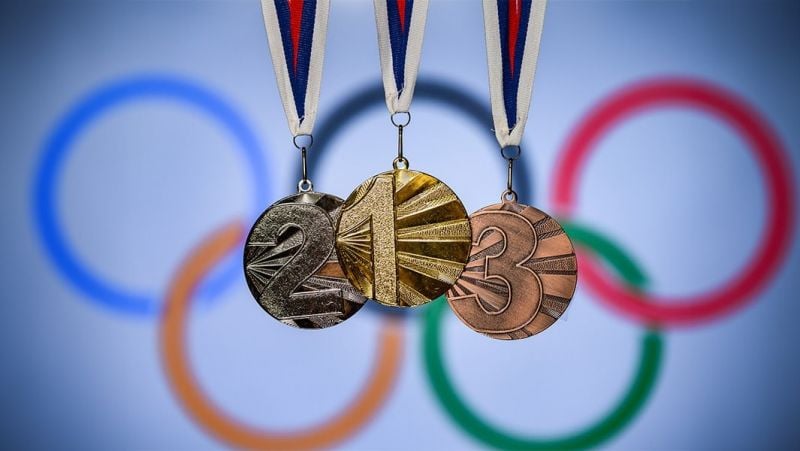
A gold medal glints under bright lights. It represents a complex machine — a combination of biology, psychology, planning, money, and luck. The athlete is at the center. But the champion is the output of a system.
Not everyone will become an Olympic champion. Most people do not. Still, the principles that make a gold medalist — discipline, careful planning, attention to small gains, and support — apply to many pursuits. In that sense, the Olympic dream machine builds champions of the soul, whether or not a podium awaits.
Short sentence to close. Dream. Work. Repeat.