Why Core Control Matters Across Sprints, Distance, and Field Events

Core control gets said so often in athletics that it can lose meaning.
It sounds simple until the event gets hard. Then it shows up everywhere. A sprinter tightens in the last 20 meters. A 1500m runner starts sitting back when the pace lifts. A jumper hits the board a little off. A thrower has power, but the throw looks like it comes out in pieces.
That is usually not about having weak abs. It is about the body losing order when speed, fatigue, or force comes in.
Not Just A Plank
A plank is fine. It has its place. But holding still on the floor is not the same as holding shape during a race, jump, or throw.
Athletics does not happen in neat positions. Arms swing hard. Feet hit the ground fast. Hips turn. Knees drive. The body leans, rotates, braces, and reacts. The middle has to help through all of that.
When it does not, other parts start covering. The lower back gets tight. The hips drop. The shoulders lift. The hamstrings may feel loaded when they should not.
That is why core work has to look a bit more like sport. Less random crunches. More control while the body is actually moving.
A meta-analysis on athletes also found that trunk muscle training can support athletic performance, which fits the idea that core work has to carry over into movement.
The Middle Stops Things Getting Messy
Every event has a point where movement can start to drift.
A sprinter gets tight. A distance runner leans back. A jumper reaches the board awkwardly. A thrower rushes the finish. None of it has to look huge, but small changes can cost a lot.
Core control helps limit that mess. It does not make the athlete stiff. It gives the arms and legs something steady to work from.
One study on college athletes found that core training may improve running economy, which supports the idea that better control can help runners waste less energy late in a race.
When the middle stays organized, the movement usually looks cleaner. When it does not, the body starts finding shortcuts. Those shortcuts waste energy.
Sprinting Shows It Fast
Sprinting gives athletes almost no time to hide poor control. Once the speed is high, small mistakes show quickly.
The hips drop a little. The head starts moving too much. The shoulders creep up. The foot lands too far in front. The athlete may still be moving fast, but the run is not as clean.
This often appears late in the race. The first part can look sharp. Then the body starts fighting.
That is where useful core work comes in. Marches, carries, dead bugs, side planks, resisted drills, and single-leg work can help. Not because they look impressive. They teach the body to stay steady while the limbs move hard.
The goal is not a sore stomach. The goal is a better sprint shape when the race starts to bite.
Distance Runners Fade Slowly
Distance runners do not usually fall apart all at once. It happens quietly.
The early laps look smooth. The arms are relaxed. The stride has rhythm. Then the pace starts to hurt. The shoulders lift. The hips sit lower. The stride shortens. The runner is still working, but the body is wasting more.
This can happen in a 1500m. It can happen in a 5000m. It can happen on the road when the last few kilometers feel longer than they should.
Core control will not stop fatigue. Nothing does. But it can help the runner hold posture for longer.
Late in a race, that matters. Sometimes the runner who keeps shape loses less speed.
Jumpers Need It When There Is No Time
In the long jump, one small loss of shape at the board can change the take-off. In the triple jump, the body has to stay together through three hard contacts. In high jump, the curve, plant, and take-off all need control.
Speed matters. Power matters. But if the middle is loose at the wrong moment, the jump can leak energy.
The useful work is often simple. Single-leg holds. Slow landings. Hip strength. Anti-rotation moves. Controlled jumps. Nothing fancy.
It just has to help the athlete stay in position when the ground contact matters.
Throwers Are Not Just Throwing With The Arm
The arm gets noticed because it finishes the throw. That makes sense.
But the throw starts much earlier. Feet, legs, hips, trunk, shoulder, and then the arm. If the middle is late, loose, or out of position, the throw can lose timing before release.
Shot put, discus, hammer, and javelin all need force to travel through the body. The core has to brace. It also has to rotate. It cannot be stiff the whole time, but it cannot be soft either.
Medicine ball throws, carries, anti-rotation drills, and controlled rotational work all fit here. The point is not to make the athlete tired. The point is to make the throw connect better.
Low-Impact Work Has A Place
Track and field already gives the body plenty of impact.
Sprinters hit the track hard. Jumpers land hard. Hurdlers repeat contact after contact. Distance runners collect miles. Throwers lift, throw, drill, and repeat.
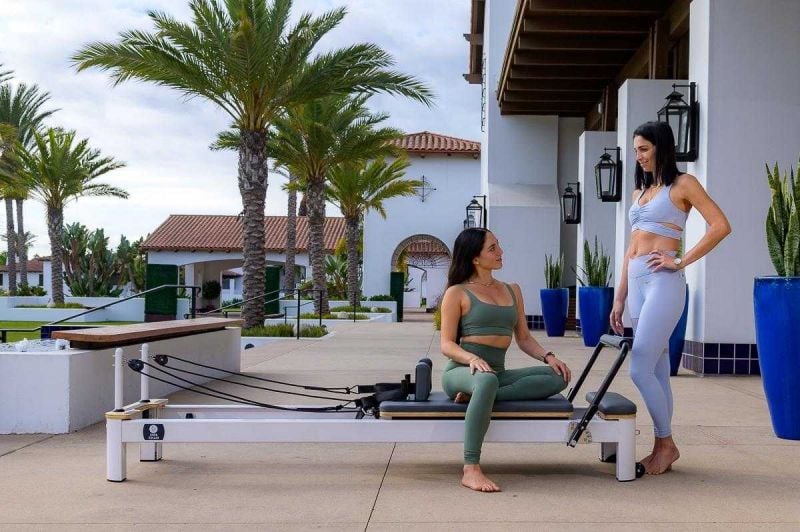
Low-impact strength work can help athletes train control without adding too much stress. Pilates-style work can fit here because it focuses on steady movement, hip strength, trunk control, and clean positions.
For athletes who want compact equipment for home or studio sessions, a controlled chair pilates option for core and hip strength can make sense when the goal is better control without turning every support session into another hard lift.
The work should help the event. If it only leaves the athlete tired, it is missing the point.
Different Events Need Different Work
A sprinter does not need the same core session as a discus thrower. A steeplechaser does not need the same focus as a high jumper.
Sprinters need control at speed. Distance runners need posture when tired. Jumpers need control at take-off and landing. Throwers need bracing, rotation, and timing.
Most athletes still need a few common things:
- Strong hips
- Single-leg control
- Trunk stability
- Control through rotation
- Posture under fatigue
None of that is new. The hard part is doing it well enough and often enough.
When The Event Gets Hard
Core control is easy to ignore when the athlete feels fresh. Warm-ups can look fine. Early reps can look fine. The first lap can look fine.
Then the event starts asking questions.
The last 20 meters. The final bend. The last jump. The throw that has to count. That is where shape matters.
Core control is not magic. It will not replace speed, power, endurance, skill, or good coaching.
It just helps the athlete hold things together when the body wants to fall apart.